
 +86-15801534258
 info@nebulabio.cn
+86-15801534258
info@nebulabio.cn

Recombinant protein expression involves the synthesis of a target protein using the transcriptional, translational, and protein-processing machinery of a host cell. Expression levels are influenced by gene sequence, vector design, host cell characteristics, and the molecular properties of the target protein. Across bacterial, yeast, insect, and mammalian expression systems, protein yields can vary considerably between targets. Some recombinant proteins are synthesized at high levels but accumulate predominantly as insoluble aggregates, while others exhibit low yields because of inefficient translation, intracellular degradation, or limited secretion. Low protein yield therefore does not necessarily indicate insufficient protein synthesis; it may also reflect differences in folding, stability, and intracellular processing.
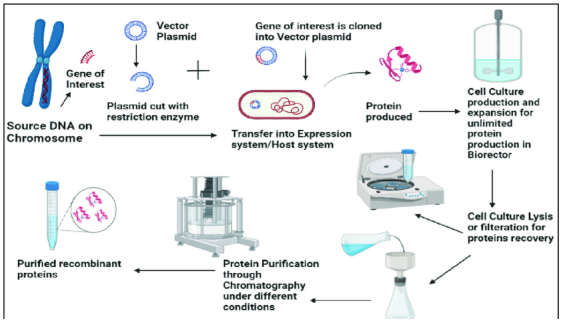
Common Causes of Low Recombinant Protein Expression
Recombinant protein production is initially governed by gene expression and its regulatory mechanisms. Transcriptional activity depends on promoter function, expression vector architecture, and host-specific regulatory factors. Following transcription, mRNA stability, translation initiation, and codon usage influence the efficiency of protein synthesis.
Codon usage bias describes differences in the frequency of synonymous codons among organisms. When a recombinant gene contains codons that are infrequently used by the host, limited availability of the corresponding transfer RNAs (tRNAs) may slow translation elongation. Local mRNA secondary structures can also affect ribosome accessibility and translation initiation. These sequence-dependent factors contribute to differences in protein expression even when the encoded amino acid sequences are identical.
The structural properties of the target protein represent another major determinant of expression level. Following translation, polypeptide chains undergo folding through hydrophobic interactions, hydrogen bonding, electrostatic interactions, and disulfide bond formation. Large multidomain proteins and cysteine-rich proteins may require more extensive folding and processing than smaller proteins with relatively simple structures. For secreted proteins that depend on disulfide bonds, the intracellular redox environment can influence correct cysteine pairing. When protein synthesis exceeds the folding capacity of the host, improperly folded polypeptides may aggregate or undergo degradation through cellular protein quality-control pathways.
Recombinant proteins may also affect the physiology of their expression hosts. Certain nucleases, proteases, and membrane-associated proteins can interfere with essential cellular functions when expressed in heterologous systems. High levels of recombinant protein synthesis increase the demand for amino acids, energy, and translational resources, creating a metabolic burden. Competition between recombinant protein production and normal cellular processes can reduce cell growth and ultimately decrease volumetric protein yield.
Factors Affecting Recombinant Protein Expression and Yield
Recombinant protein expression optimization involves several interconnected biological processes. Expression host characteristics, culture conditions, and protein folding behavior can influence both total protein accumulation and the amount of soluble, intact protein.
Expression hosts and protein-processing capacity. Bacterial expression systems such as Escherichia coli support efficient synthesis of many recombinant proteins but generally lack the complex glycosylation pathways found in eukaryotic cells. Yeast, insect cells, and mammalian cells possess different capabilities for protein folding, post-translational modification, and secretion. For glycoproteins, disulfide-rich proteins, and multiprotein assemblies, host-specific processing mechanisms may affect the accumulation of correctly folded proteins. HEK293 and CHO cells both contain endoplasmic reticulum and Golgi processing pathways, although their glycosylation profiles, secretory characteristics, and intracellular quality-control mechanisms are not identical.
Culture conditions and protein synthesis. Temperature, medium composition, dissolved oxygen, pH, and nutrient availability influence cellular metabolism and recombinant protein production. In bacterial expression systems, temperature affects cell growth, translation rates, and protein folding kinetics. Rapid protein synthesis may increase the accumulation of improperly folded or aggregated proteins, whereas lower temperatures can improve the soluble fraction of certain targets without necessarily increasing total expression. Induction strength and expression duration also affect protein accumulation. Strong transcriptional activity may increase metabolic burden, while prolonged expression can be accompanied by protein degradation or reduced cell viability.
Protein folding, fusion tags, and stability. The intracellular stability of recombinant proteins depends on their native conformations, hydrophobic surface regions, and intermolecular interactions. Fusion tags such as His, GST, MBP, and SUMO have different structural properties and may influence expression behavior. MBP and SUMO fusions can improve the solubility or stability of certain proteins, although these effects are target-dependent. His tags are primarily used for affinity purification and generally provide little intrinsic solubility enhancement. Tag placement can also influence terminal structure and local folding. For proteins containing signal peptides, transmembrane domains, or specialized binding regions, differences between fusion constructs and native protein architecture may affect stability and intracellular localization.
Low Protein Expression vs. Low Protein Yield
Total protein expression, soluble protein yield, and final purified protein recovery represent distinct measurements. Total expression reflects the overall accumulation of the target protein within the expression system. Soluble protein yield describes the amount present in the soluble fraction, whereas purified protein recovery is additionally influenced by extraction, purification, and concentration processes.
Inclusion body formation in bacterial expression systems illustrates these differences. Some recombinant proteins accumulate at high levels but form insoluble aggregates because of improper folding or intermolecular association. When only the soluble fraction of a bacterial lysate is examined, the target protein may appear to be poorly expressed even though substantial amounts are present in the insoluble fraction. In this situation, low soluble protein yield does not indicate low total protein synthesis.
For secreted proteins expressed in mammalian cells, extracellular protein accumulation is also influenced by intracellular trafficking and secretion efficiency. Newly synthesized polypeptides enter the endoplasmic reticulum, where folding, disulfide bond formation, and protein quality-control processes occur. Proteins that fail to fold correctly may be retained and eliminated through pathways such as endoplasmic reticulum-associated degradation (ERAD). Consequently, detectable intracellular expression does not necessarily correspond to high protein concentrations in the culture supernatant.
Protein degradation can further reduce the apparent yield of intact recombinant protein. Proteolytic cleavage may generate lower-molecular-weight fragments during intracellular processing or subsequent purification. In multidomain proteins, some truncated fragments may retain antibody-binding epitopes and therefore produce multiple immunoreactive bands during Western blot analysis.
Analytical methods such as SDS-PAGE, Western blotting, and ELISA provide complementary information about recombinant protein expression. SDS-PAGE is commonly used to assess relative protein abundance and solubility distribution, while Western blotting enables target-specific detection in complex samples. ELISA can quantify proteins containing the epitopes recognized by the assay antibodies. However, band intensity, immunoreactivity, and final purified protein recovery are not interchangeable measurements.
The final yield of a recombinant protein reflects the combined effects of synthesis, folding, stability, intracellular processing, and recovery. Changes in expression conditions may influence one or several of these processes. Increasing total protein expression, improving the soluble protein fraction, and increasing the recovery of intact protein are therefore related but distinct outcomes.
| For more information, please contact us at info@nebulabio.cn or +86-15801534258. |